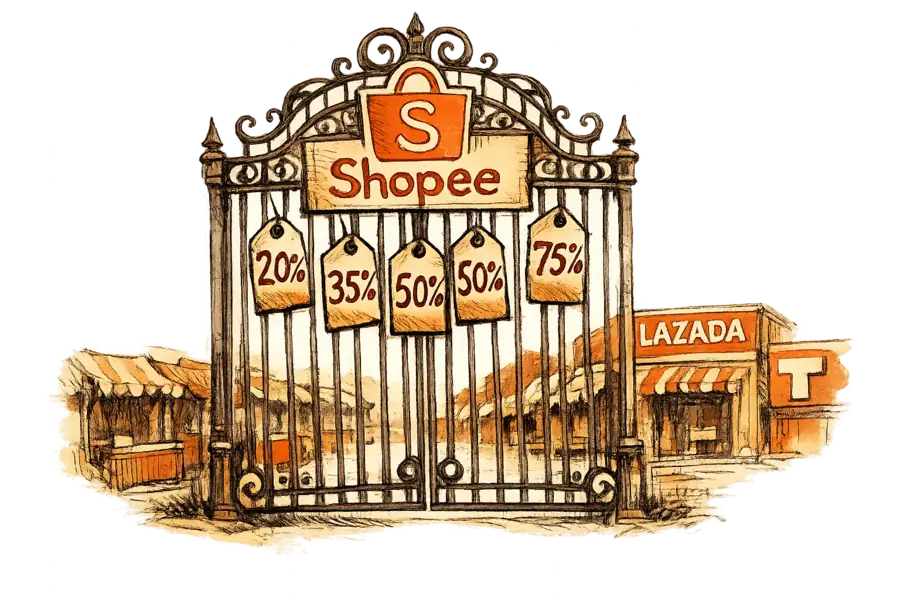
Shopee Raises the Bar and the Fee at the Same Time
Shopee raised commissions, added a technical support fee on overseas sellers transacting into Singapore, and tightened its Preferred Seller thresholds in quick succession. The compounding pressure accelerates professionalization but narrows the long-tail assortment that built Southeast Asia's marketplace model.
Sir John Crabstone
Shopee now charges sellers more and demands they behave better. The standards tightened in October 2025; the fees followed in February 2026. Together they tell a single story: Southeast Asia’s dominant marketplace is choosing revenue per transaction over breadth of assortment.
The numbers are blunt. Commissions rose roughly a third in a single year, Bloomberg reported. In February, a new 5 per cent technical support fee took effect for overseas sellers transacting with Singapore customers. Effective take rates for non-mall sellers now exceed 16 per cent of post-discount sales before advertising.
Shopee also raised its Preferred Seller thresholds: the unique-buyer requirement from 35 to 100 per month, and the net-orders requirement from 75 to 100. The unique-buyer bar nearly tripled; the net-orders bar moved up by a third. Sellers who miss the marks lose preferred status and the visibility that comes with it.
The exits have started, for more than one reason. In Vietnam, 80,000 fewer shops generated orders in the first half of 2025 than a year earlier; the government’s crackdown on counterfeit goods drove most of those closures, with rising fees compounding the difficulty for smaller sellers. Shopee’s official-brand Shop Mall tier grew 63.3 per cent in the same market over the same period. The platform is not shrinking; it is shedding.
Sea Limited’s full-year results explain the confidence behind the squeeze. Shopee posted $127.4 billion in GMV for 2025, up 26.8 per cent. Core marketplace revenue grew 50.2 per cent year on year in the fourth quarter.
The gap between GMV growth and revenue growth is the take-rate story.
The logic is familiar. Amazon raised fees; Alibaba professionalized Tmall; Shopee follows the script. But Southeast Asian marketplaces built their GMV on a proposition Amazon never made: vast assortment from millions of micro-sellers who could list a product for near-zero cost. The fees were low because the sellers were small. Raise both the fees and the bar, and the catalogue narrows toward the same brands available everywhere.
Shopee’s bet is that professional sellers and their advertising will replace the long tail’s contribution. The quarterly numbers currently agree. Whether a marketplace that looks like every other marketplace deserves to be called one is a question Shopee would prefer its shareholders not ask.