E.l.f. Told Wall Street It's an Entertainment Company
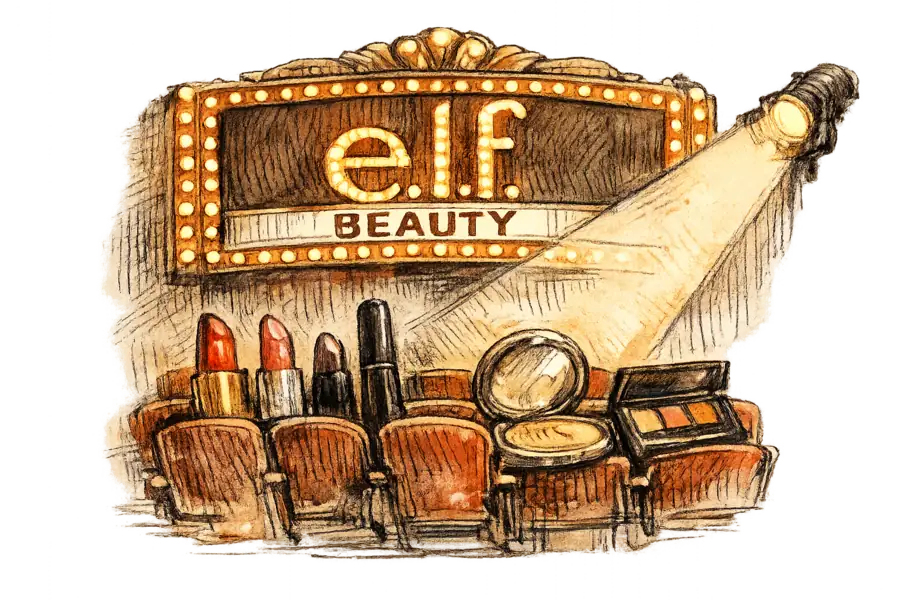
E.l.f. Beauty's CEO declared the company 'an entertainment company that happens to sell beauty products' days after posting Q3 results. With organic growth at 2 per cent, the reframe asks Wall Street to value content reach over product performance.
Sir John Crabstone
Tarang Amin told CNN in February that e.l.f. sometimes describes itself as “an entertainment company that happens to sell beauty products.” That description surfaced days after the company reported its Q3 fiscal 2026 results. When a beauty CEO reaches for the entertainment analogy during earnings season, the brand-as-media thesis has left the consultant deck.
The quarterly numbers explain the reframe: net sales rose 38 per cent to $489.5 million. Rhode, the Hailey Bieber brand acquired for a reported $1 billion, contributed $128 million. Organic growth without Rhode was 2 per cent. Two per cent is respectable; it is not the trajectory that built 28 consecutive quarters of sales growth. The entertainment label asks investors to read a different scoreboard.
The scoreboard is not hypothetical: a Liquid Death collaboration generated over 4 billion earned impressions. Its Roblox tie-in logged over 25 million attempts averaging over seventeen minutes per session. E.l.f.’s unaided brand awareness has climbed from 13 per cent to 45 per cent in five years. Audience, dwell time, earned reach: media-company metrics reported in a beauty-company filing.
Entertainment companies spend to acquire audience; beauty companies spend to move inventory.
E.l.f. has chosen its category. Marketing consumed 21 per cent of Q3 net sales, down from 27 per cent the prior year. The annual target is 24 to 26 per cent. Content velocity delivers what media buying cannot: audience earned rather than purchased. When a best-seller retails for $11, the product is the tour T-shirt — proof of attendance, not the reason for the concert.
What remains unresolved is whether the market agrees. E.l.f.’s share price has fallen sharply from its 52-week high. Wall Street still prices beauty companies on organic growth. It has not yet learned to price them on impressions. Amin is betting it will.