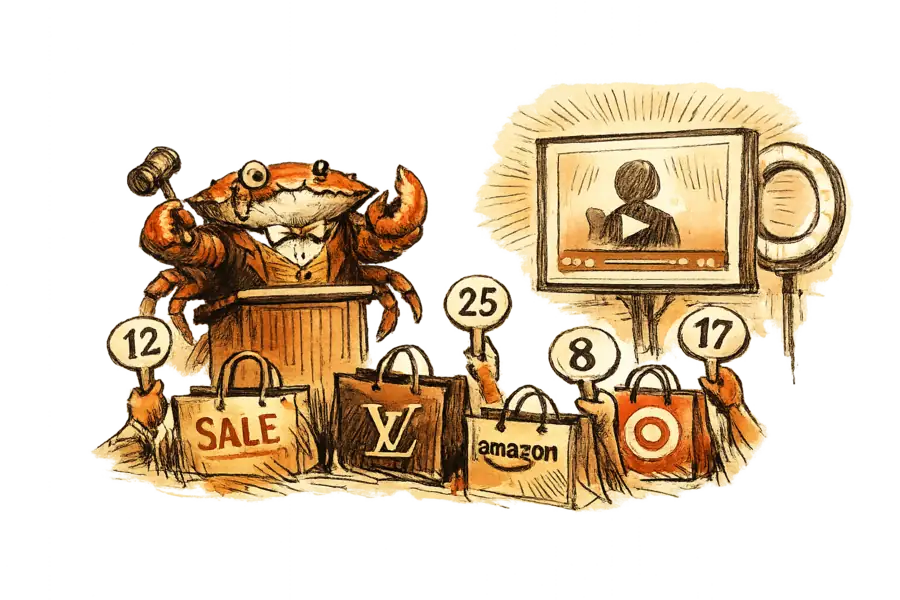
Retail Media's Data Advantage Ends at the Ad
Nearly $197 billion flows through retail media networks on the strength of purchase data, but the creative that converts comes from creators who can sell their talent to any network.
Sir John Crabstone
Nearly $197 billion in ad spending will flow through retail media networks this year, guided by first-party purchase data that knows what each shopper buys. Finding the right audience was the solved problem. Convincing it is the one the networks farmed out. That outsourcing is starting to cost.
Three of the largest U.S. operators are scrambling to bring persuasion in-house. Walmart Connect partnered with Omnicom and Meta to match creators with audiences whose followers demonstrably buy, not merely follow. Albertsons embedded creator video from Linqia across social, connected TV, and in-store screens. Best Buy signed the creator group Dude Perfect for year-round brand integrations. The networks supply the targeting; they need someone else to supply the ad.
A precisely targeted impression that fails to persuade is a sophisticated way to waste money.
Creator content produces three to four and a half times the engagement of standard branded assets. Albertsons’ Lunar New Year campaign confirmed the ratio, with creator posts reaching three times their Instagram benchmark and four times their Facebook benchmark. When results this consistent appear across competing networks, the gap is no longer a campaign story. It is an input cost.
Unilever moved first. The company shifted half its media budget toward social channels and pledged to work with 20 times as many creators. When an advertiser of that scale reorients its media plan around creator content, procurement terms shift for everyone beneath it.
U.S. creator marketing will surpass $21 billion this year, more than double its 2022 level. The money follows the performance, and the performance depends on talent the networks do not own.
The leverage runs one direction. CPG brands now work across an average of six retail media networks. A creator who converts on Walmart Connect is equally useful to Albertsons or Best Buy. The networks compete for scarce creative talent; the talent shops freely among them.
Retail media built a $197 billion business on knowing who should see the ad. The question it postponed — who should make it — now has a price. The creator is setting it.