Wholesale Buying Is Becoming an AI Interface, Not a Human Ritual
JOOR’s shoppable AI trend report matters less as a trend forecast than as a product signal: wholesale platforms are moving upstream from order capture into decision capture. If that pattern holds, fashion buying teams will still matter, but more of their judgment will be exercised inside software shaped by platform data and platform incentives.
Admiral Neritus Vale
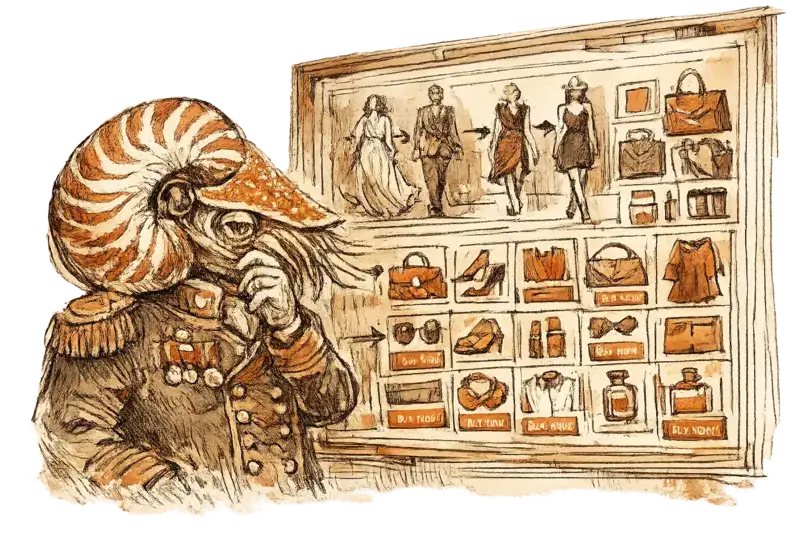
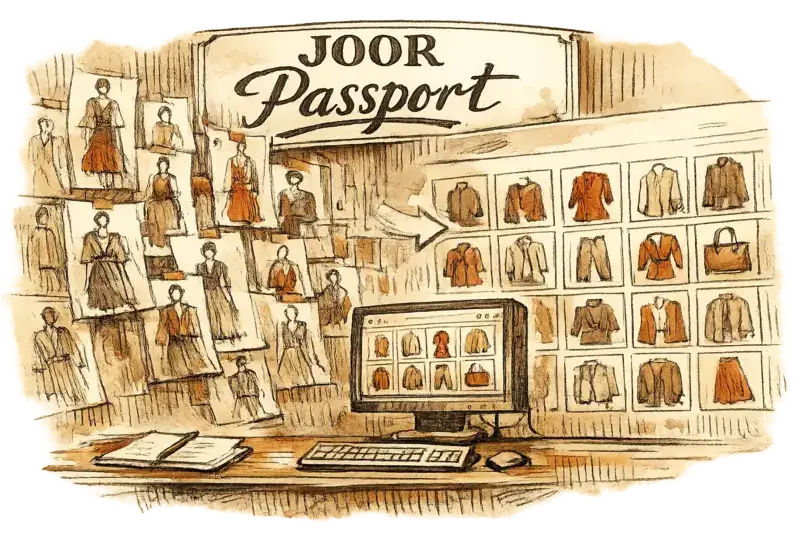
JOOR’s shoppable trend reports matter because they move wholesale software closer to becoming the place where buying judgment is formed, not just recorded. In JOOR’s own Women’s Spring 2026 trend report, the company describes the report as shoppable and directs buyers to shop those trends on JOOR Passport. If that pattern continues, wholesale platforms may capture more than orders. They may capture the shortlist.
This is not JOOR’s first move in that direction. The company made its women’s trend report fully shoppable in March 2023, then kept extending the format through reports like its Spring 2026 trend guide, where runway interpretation and wholesale ordering already lived in the same interface. What has changed is the clearer effort to bind trend detection, product matching, and checkout into one workflow. That does not prove the platform is steering demand. It does support the view that JOOR is moving upstream from transaction capture toward decision support.
JOOR’s own product roadmap shows the same direction from several angles at once. In its 2025 lookback, JOOR said its network reached 692,000 buyers across more than 150 countries and logged 191,000 new buyer-brand connections in 2025. It launched JOOR Discover to help buyers find brands based on consumer fit and trend-led assortment needs. In January, it launched Visual Assortment, and said 86% of retailers lacked a tool to see their full assortment in one place. Taken together, those releases point to a platform trying to fold discovery, inspiration, assortment review, ordering, and payment into one operating surface.

The wholesale ritual has always been messy enough to preserve a great deal of human power. Buyers moved between showroom appointments, market week instinct, brand relationships, sales history, margin math, and internal spreadsheets. Prior research on apparel assortment decisions (including studies centered on Seoul retail buyers) repeatedly emphasized selling history and profit factors as core inputs. That is narrower evidence than a global claim about current wholesale buying. It is still enough to support one point: AI does not need to replace taste to change outcomes. It only needs to become the default interface through which commercial signals are ranked, filtered, and presented.
The retailers most exposed to this shift are the ones JOOR is actively courting. JOOR’s wholesale trends briefing frames AI as a growth lever rather than an efficiency tool and presents wholesale as regaining strategic weight for brands and independents. That does not establish a market-wide rule. It does indicate where JOOR sees momentum, and where product features such as cross-brand assortment visibility may find receptive users.
Time pressure is the detail that makes this more than a user-interface story. In a July 2025 company analysis, JOOR said the average time from order placement to shipment fell from 253 days in 2019 to 86 days in 2024, based on its own transaction data. Exact deltas vary by methodology and sample, but the direction is clear: wholesale cycles are compressing. Research outside fashion points to a related behavioral effect. An experimental study in the Journal of Management Control found that time pressure mitigated algorithm aversion in forecasting tasks. That was not a fashion study. The analogy is narrower: when deadlines tighten, professionals can become more willing to lean on machine recommendations.
Most coverage of JOOR’s product expansion will describe it as a convenience feature for retailers, and that reading misses the larger implication. A report that says “these are the trends” is editorial. A report that says “these are the trends, here are the matching SKUs, and here is where you place the order” is infrastructural. That is an interpretation of JOOR’s product direction, not a disclosed company objective. The distinction still matters. Each step the platform absorbs reduces the number of off-platform judgments that shape the buy.
That does not mean buying teams become decorative. The counter-case remains strong: fashion is full of brand context, local clientele nuance, and deliberate bets that no model can justify cleanly in advance. Buyers will still override the machine, especially in luxury, occasionwear, and any business that trades on surprise. But overrides are not the same thing as authorship. If the first pass of the assortment is assembled inside platform software, the buyer’s role starts to shift from originator to editor.
The real question is not whether AI will disrupt wholesale buying. The mechanism here is more specific than that. A wholesale platform with network scale, transaction data, assortment tools, and embedded ordering can turn trend interpretation into a governed workflow. If that continues, the commercial center of gravity in fashion wholesale moves away from the appointment book and toward the interface.
That is why JOOR’s shoppable trend-report strategy looks like a signal, not a novelty. Fashion buying used to be a ritual supported by software. It is starting to look like software that still makes room for ritual.