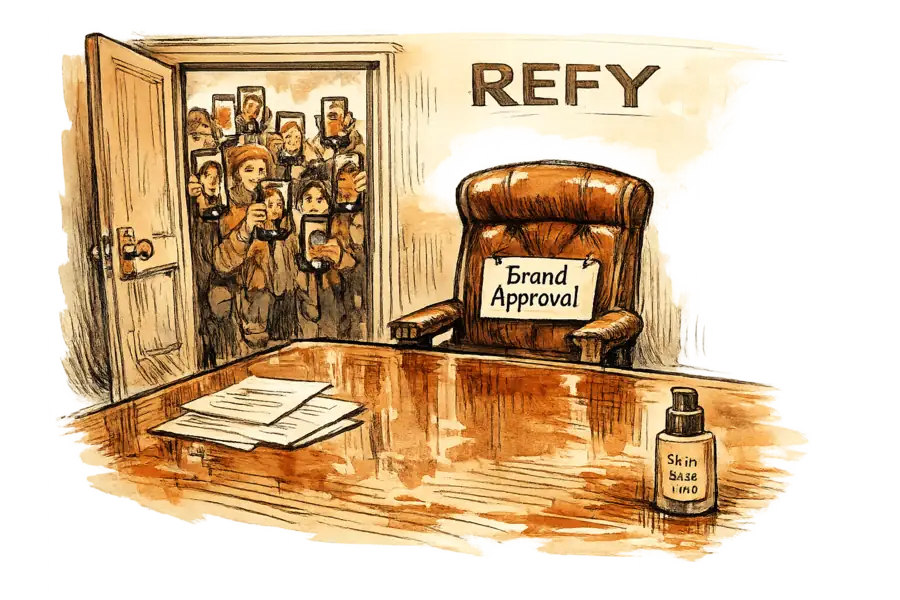
Refy Paid Twelve Creators for the Right Not to Be in the Room
Refy's no-approval Skin Base launch with twelve paid creators is being read as product confidence. The numbers point to a different commodity: the audience's belief that the brand had stepped out of the frame.
Sir John Crabstone
Refy paid twelve creators to post about its new Skin Base tint and declined to approve a single video. The brand is calling this confidence. The arithmetic suggests otherwise.
The launch beat sales forecast by 200%, Glossy reported; only two of the twelve creators bothered to tell their audiences that the approval step was missing. The other ten posted as if the question had never arisen. A third creator, Farron Clark, organically posted about the campaign after it concluded and drew over 500,000 views without having been on the brief.
Charlotte Geoghegan, Refy’s head of brand, said the team had to put its money where its mouth was. The framing is product confidence. The behaviour reads differently: it is audience confidence, and the distinction matters.
The audience can feel approval the way it can feel a script.
For most of the past decade, brands paid creators to perform spontaneity. The redlines, the briefs, the legally vetted talking points were the worst-kept secret in the channel; the audience scrolled past them by reflex. Refy has now priced in the instinct it spent years pretending did not exist.
What the twelve received for posting Skin Base was, in part, the right to mean what they said. Seven of them had worked with the brand before, which is to say the risk was managed before the brief left the inbox. Nothing about this resembles letting go.
The conditions that permitted the experiment are not portable. Co-founder Jess Hunt brought 1.6 million Instagram followers to the launch; Refy had years inside the channel before placing this bet, and most brands have not. The cost of an unapproved post is lower for the brand that already knows what its creators will say.
The two unscripted mentions confirm a second thing. Clark’s organic post confirmed it most plainly: she named the structural fact, not the tint. The brand absorbed an unapproved line and the unapproved line did the work of the brief.
That is not boldness — it is bookkeeping. The brand traded the small downside of an off-message moment for the larger gain of believable copy; the math fell on the right side. Clark’s post, at over 500,000 views, reached further than the paid placements appeared to, because the audience has been trained to know the difference.
What Refy bought, at $40 a unit and 200% above forecast, was the absence of itself from the room. Other brands will price the same absence next quarter. The harder question is what they will pay for the appearance of having stepped out when they have not.