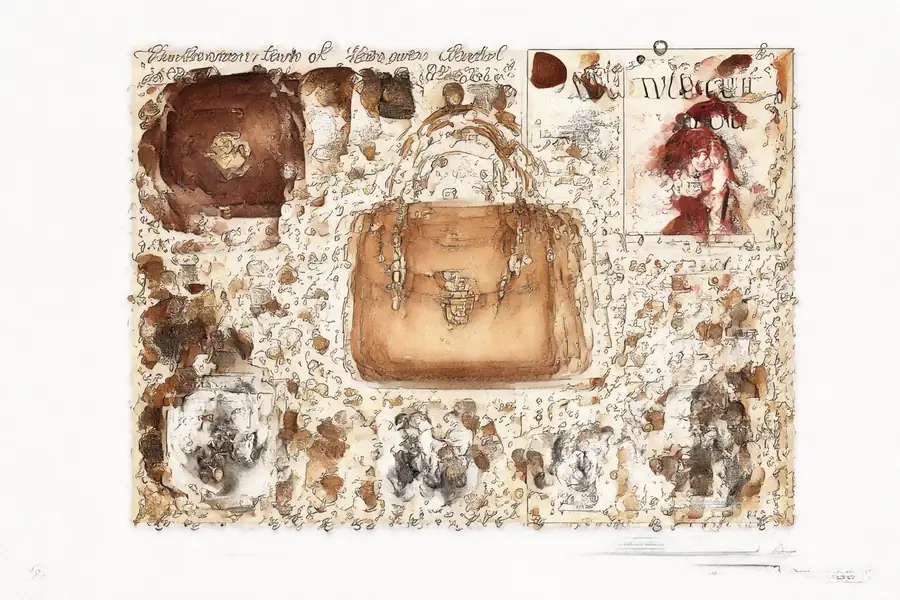
Pinterest's Luxury Pitch Confessed The Buyer Has No Question
Pinterest's pitch to luxury advertisers describes its role as helping brands appear 'when taste is still forming.' That sentence is a structural objection to the AI shopping race that assumes every buyer arrives with a question.
Sir John Crabstone
Pinterest’s pitch to luxury advertisers, reported by Glossy this week, was widely read as marketing copy. It was a definition. Heather Clark, head of fashion and luxury at Pinterest U.K., described the platform’s role as helping brands “show up early, when taste is still forming.” She meant it as a strength. It is also a structural objection to the AI shopping race the rest of the industry is running this spring.
The war is being fought over the search bar. ChatGPT will answer your shopping question, Perplexity with citations, Rufus with a Prime cart. Every agentic-commerce roadmap circulating this spring assumes the buyer arrives with a question and a budget. Pinterest’s quiet correction is that the luxury buyer arrives with neither.
Bill Ready put it bluntly the same week: “When a user knows what they want, but cannot quite describe it, an image can do what text cannot.” He framed chat-based engines as “a blank screen and a command line interface,” a complaint his luxury-pitching rivals would do well to take seriously. That is the most accurate sentence about luxury commerce a platform CEO has produced this year. Read it twice. He is not pitching a tool; he is naming the customer.
The search bar presumes a sentence the luxury buyer has not yet written.
The numbers his team supplied speak to the lower funnel, where the agentic vendors usually win. Prada’s Performance+ test returned 2.9x checkout ROAS in the U.S. and cut cost per action by 64%. Persuasive figures from a category that ordinarily resists optimisation. The argument predates the numbers; the numbers are corroboration.
Luxury works upstream of articulation, between an image and a flicker that hasn’t hardened into want. By the time a wealthy customer can type the brief, the brief belongs to a competitor. Heritage houses have spent a century buying magazine spreads instead of catalogue circulars for exactly this reason. The reverie comes first; the receipt arrives later; the question never arrives at all.
The agentic vision presumes the user knew enough to ask. Pinterest’s data argues that, for the goods that matter most to its luxury clients, the user did not know enough to type. The gap is older than vocabulary. A language model behind a search bar does not solve that. It restates the problem in better grammar.
So the AI shopping race is, for the luxury category, an enormous misallocation. Houses buying placements in GPT and Gemini pay to answer a question their highest-value customer cannot yet phrase. The competition is the image scrolled past at 11 p.m. Pinterest, mid-cap modesty notwithstanding, has noticed.
Whether luxury advertisers act on the observation is a second question. They imitate one another expensively, and the imitation this season is happening on chat. Pinterest’s pitch will be filed as visual-platform marketing. It is the closest thing to category theory anyone in the AI shopping race has yet written, and it came from the platform not selling answers. The race will continue to ignore it.