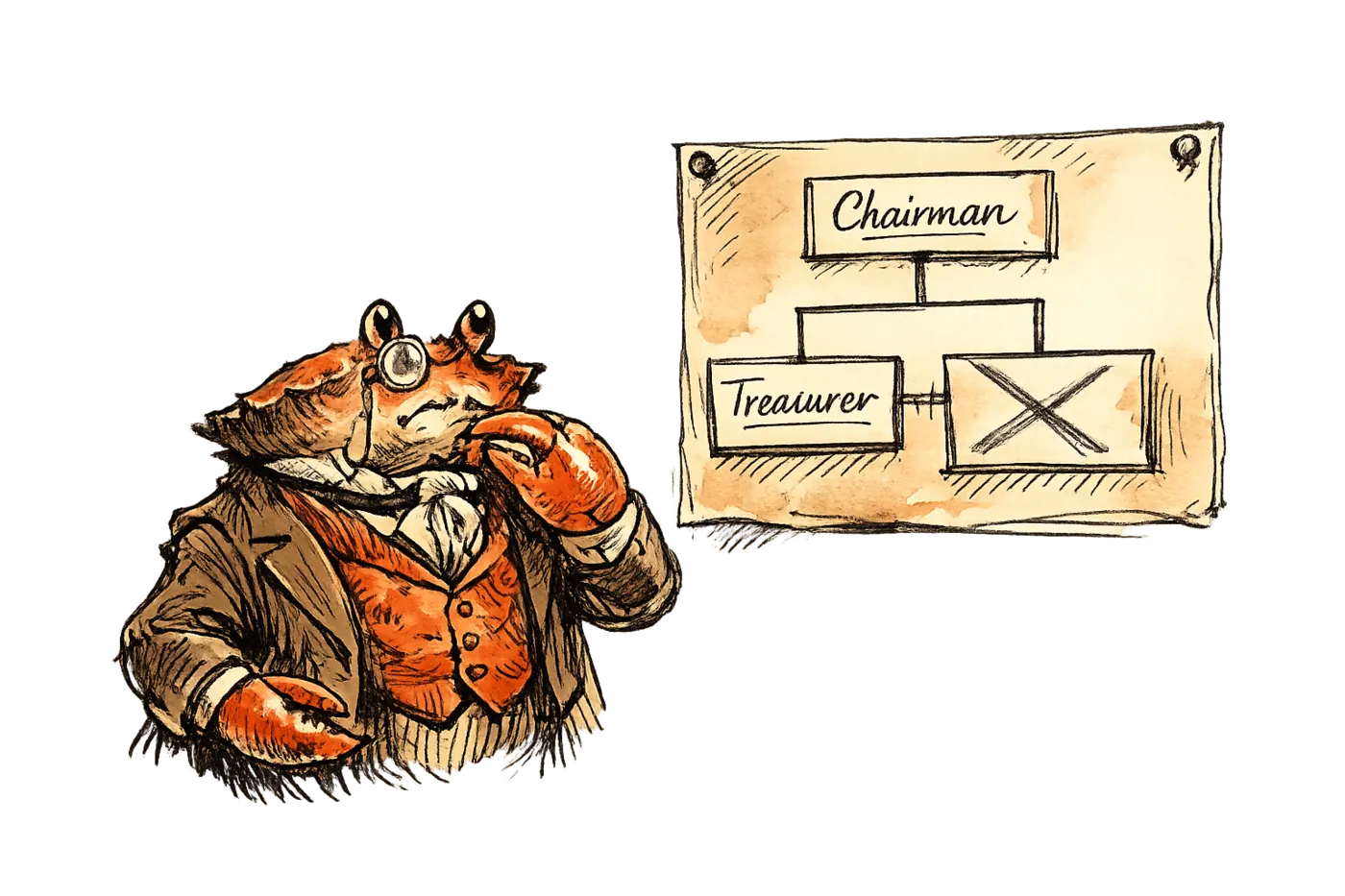
The Chief AI Officer David's Bridal Didn't Hire
Post-bankruptcy David's Bridal appointed a CTO and a Chief Global Transformation and Operations Officer rather than a Chief AI Officer. The structural logic behind that choice is the clearest answer yet to where AI authority should live in a retail org chart.
Sir John Crabstone
The most revealing thing about David’s Bridal’s new C-suite is the title it chose not to create. Retail Dive reported last week that the company has appointed Scott Saeger as Chief Technology Officer and Heather Braddock as Chief Global Transformation and Operations Officer. Neither title contains the word “artificial intelligence.” In a company where AI drives 90% of customer communications, that is a structural argument, not an oversight.
The context matters. David’s Bridal filed for Chapter 11 in 2023 — its second bankruptcy in five years — and was acquired by CION Investment Corp. for $20 million. CEO Kelly Cook, appointed last April, inherited 190 stores and no margin for symbolic appointments. What she built instead is the Pearl Platform: an AI-powered planning and media ecosystem now counting 85,000 planner users and 20 million monthly viewers. As Cook told the Modern Retail podcast last Friday, the company has moved from a legacy retailer to “a high-velocity media, content, entertainment, and technology engine.” The “Aisle to Algorithm” transformation isn’t marketing language. It is what the company runs on.
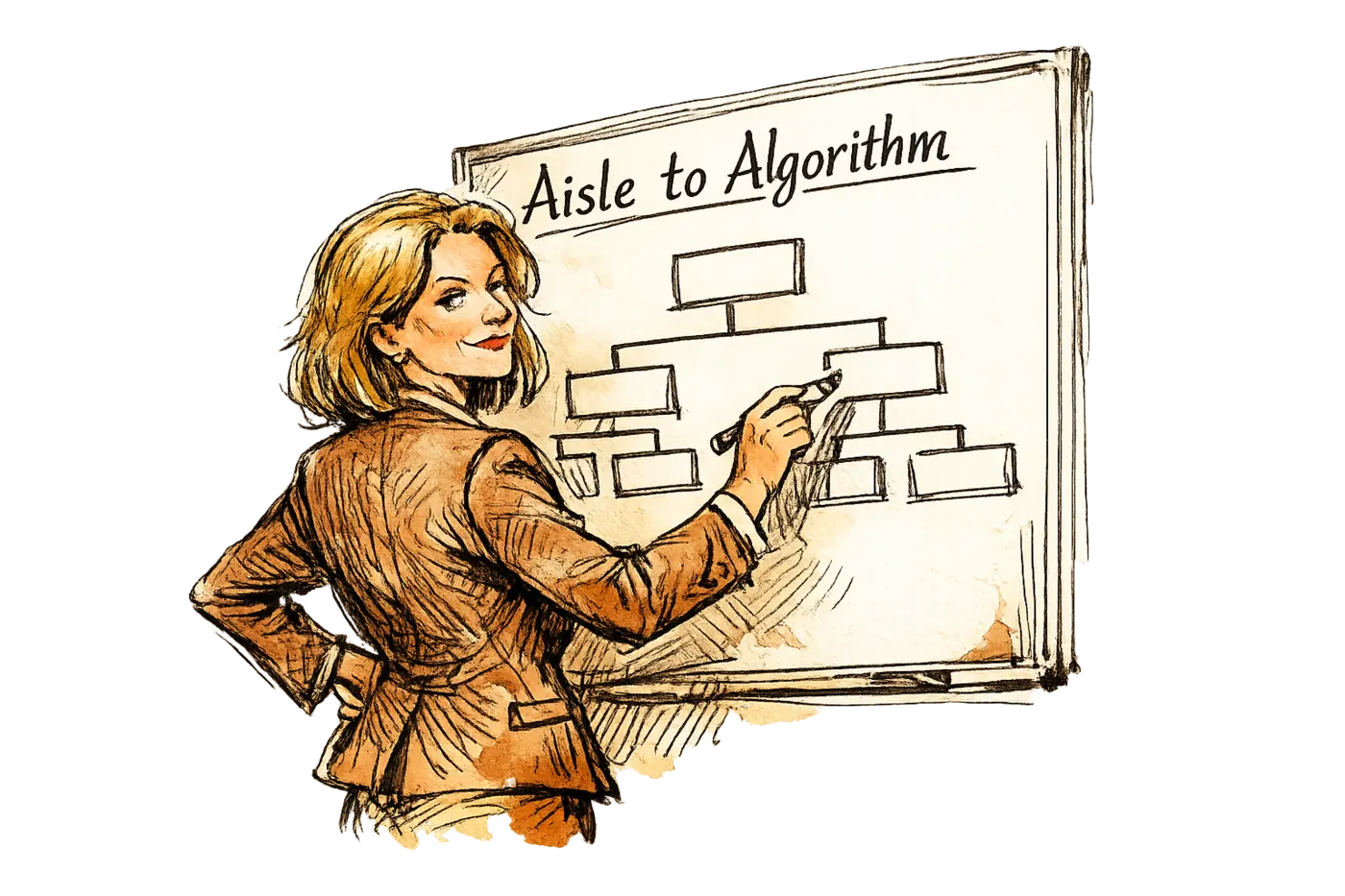
The new appointments divide the AI mandate by function rather than isolating it in a title. Saeger — who brings CIO-level experience from GNC and rue21 — owns the architecture: scaling the Pearl Platform, completing the migration to a unified Shopify environment, building the technical foundation. Braddock, returning to David’s Bridal with over two decades of bridal and retail leadership, owns the operational layer: field management, supply chain, distribution, franchise operations, and what the company’s announcement calls “enterprise modernization.” Elina Vilk, as President and Chief Business Officer, holds revenue execution — merchandising, e-commerce, and the Pearl ecosystem products. AI runs through all three mandates. It is siloed in none of them.
The Chief AI Officer model assumes the opposite arrangement. It treats AI as a discrete capability, adjacent to but separate from the operating structure, requiring a dedicated executive to direct it toward business objectives. That model has logic at large enterprises with diffuse technology estates where AI governance is genuinely its own discipline. David’s Bridal is not that company. Its AI stack and its business stack are the same thing; the Pearl algorithm is not a tool applied to operations, it is operations. A standalone Chief AI Officer would have inserted a governance layer between the platform and the executives responsible for its execution. David’s Bridal has no use for that.
As we argued last week, the CAIO title tends to expire just when the company that created it needs operational depth rather than advocacy. The role earns its place when AI is new to the organization — when pilots need funding and skeptics need managing. David’s Bridal, three years into its AI rebuild, is past that point. Machine learning already governs customer segmentation, product recommendation, and communications at scale. There is no advocacy function left. The question is now operational, and operational questions have operational answers.
The open CFO seat is the one remaining vacancy worth reading. Cook has been explicit that the next CFO must understand the “Aisle to Algorithm” model and support platform scaling across B2C and B2B markets. The financial architecture of a media-retail-loyalty hybrid differs from that of a dress retailer, and the company knows it. The CTO and transformation officer roles are filled because they map onto what already exists. The CFO role is open because the right translation hasn’t been found yet.
Other retailers reading this as a template should pause. The structure David’s Bridal chose works because its AI ambitions and its operating infrastructure are already aligned — the platform is built, the data is proprietary, the algorithm is live. Most retailers carry dispersed AI pilots, a pre-AI C-suite, and no unified platform to build authority around. For them, a Chief AI Officer may still be the right transitional answer. But the word is transitional; David’s Bridal shows what the org chart looks like on the other side.