Alvanon Hired From the Tech Pack, Not the Fitting Room
Alvanon's two new regional directors arrive from a client's product-development team and from her own DTC-brand-and-consultancy background. The hires point the sale of sizing data upstream, at the people who write the specification a factory works from.
Sir John Crabstone
Alvanon has hired its own customer. The sizing firm named two regional directors this month. One of them, Tabitha Chilton, ran digital product creation at HanesBrands and standardised its technical fit on Alvanon’s avatars and mannequins. That is the side of the table that signs. A vendor’s field hires name the buyer it wants, and Alvanon’s now sits upstream of the sample.
The second appointment points at the other end of the same process. Laura Berens founded the DTC label Love & Fit before moving into ecommerce consultancy, and describes her new work as “making accurate, consistent product data available to AI agents and breaking down legacy silos between teams.” Neither hire is a fit technician. Alvanon has staffed the specification and the product page, and left the fitting room to the mannequins.
Fit has been sold to this industry as a returns problem. That framing puts it with ecommerce and quality control, both of whom inspect work already done. A return is the receipt for a decision taken a season earlier, by someone drafting measurements for a factory. The money was gone before the parcel came back.
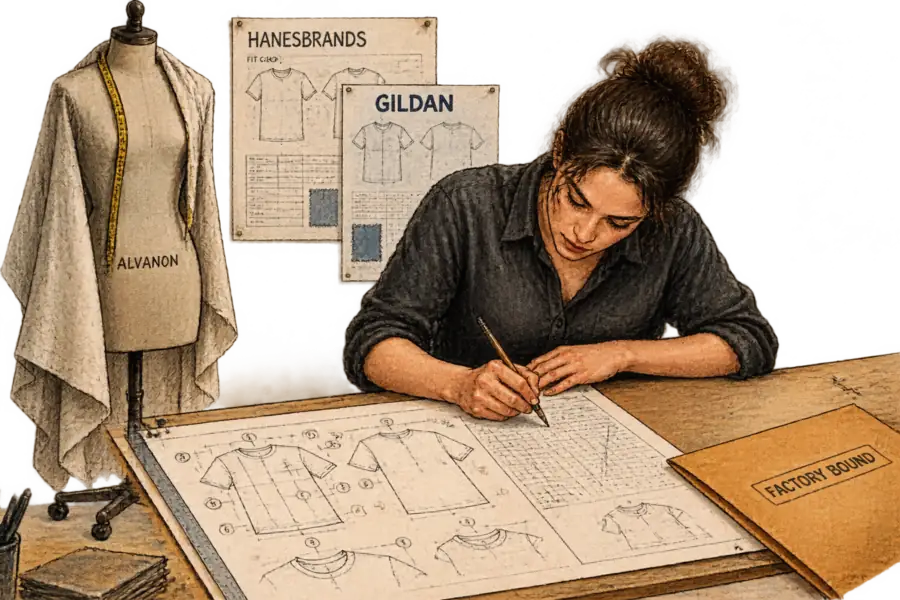
The tech pack is where those decisions live. Grade rules and tolerances are settled before a sample exists, in a document the factory works from. Sending a product-creation lead into a client’s building means Alvanon expects the argument to happen there.
A fitting room can only reject the garment a tech pack already permitted.
Sourcing Journal’s account of the Coresight study Alvanon co-authored makes the commercial case plainly. Bershka aligned its entire range across internal teams and suppliers using digital avatars and physical mannequin twins, and cut returns by 10%. The saving came from what the factories were told to make, not from anything a shopper returned. No fitting room recovers that.
The same Sourcing Journal account puts machine-readable sizing at the centre of agentic shopping: AI agents rely on structured data to evaluate and recommend products, and penalise brands whose sizing is inconsistent or incomplete. An agent cannot recommend what it cannot parse.
We argued in July that the gate was already closing. A size chart drawn for human eyes cannot be published as a specification, because it never was one.
Note where the standard Chilton built now sits. Gildan closed its purchase of HanesBrands on 1 December 2025 and is pursuing at least $200 million in run-rate cost savings. The Hanes fit standard lives inside that arithmetic now, while the person who standardised it works for the firm selling the same tools to Hanes’s competitors. Nothing was taken. Knowledge relocated to the party that can sell it twice.
That leaves the buyers somewhere awkward. The body a label fits to will be specified by a firm that also specifies its rivals’, which is how an industry acquires a standard nobody voted for. Alvanon did not set out to write the rules; it was hired to solve returns, and rule-writing was the only thing that worked. Standards are efficient. This one has an owner.